Written by
Ignacio G. Martinez
Legal Expert
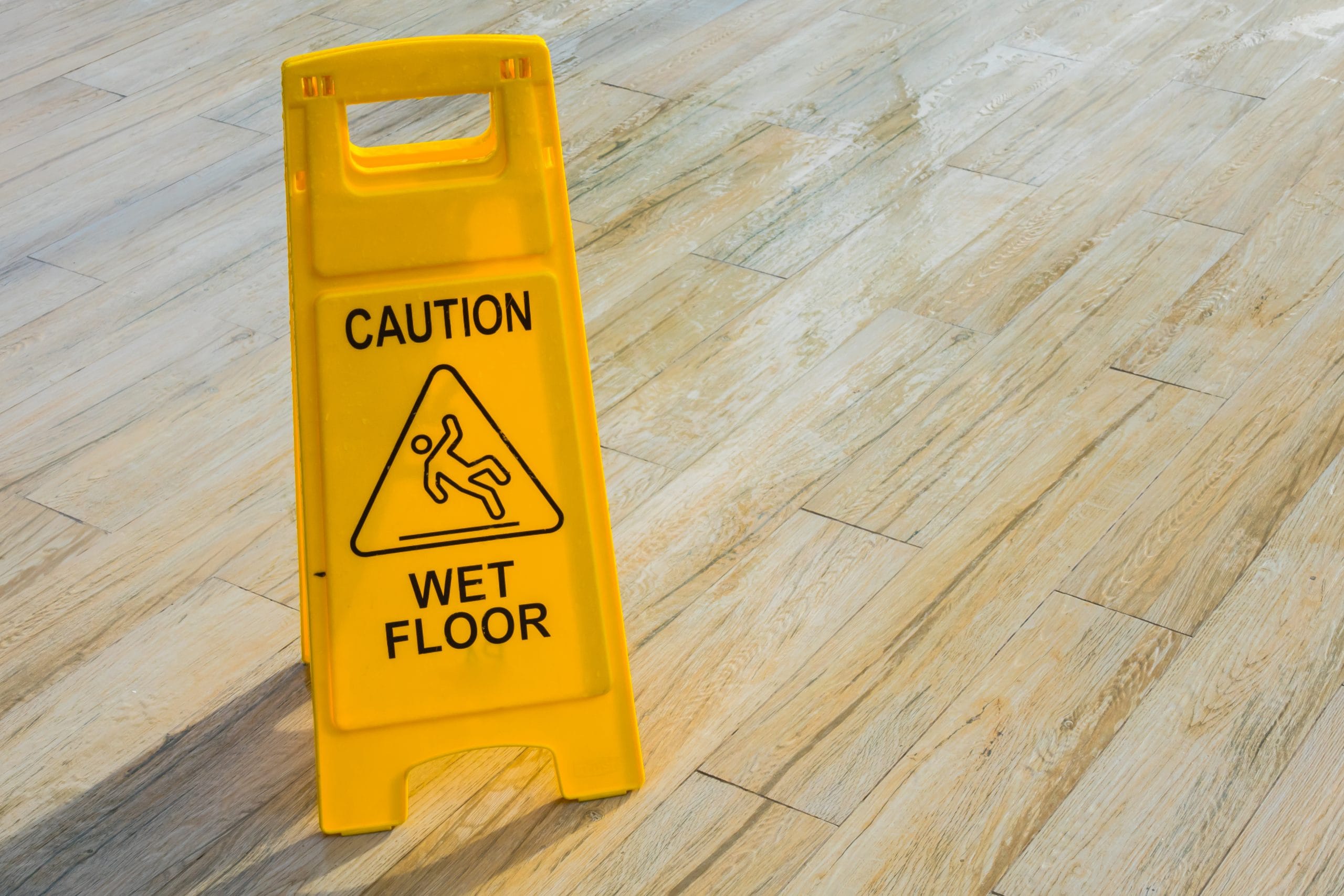
It’s the produce section, most often. A misting system keeps the lettuce fresh and drips onto the floor in front of it. A grape rolled off a display an hour ago, and nobody’s swept that aisle since. There’s no cone, no sign, nothing to warn a shopper that the floor under their next step isn’t what it looks like. One second they’re pushing a cart, and the next they’re on the ground with a fractured wrist or a torn rotator cuff and a store manager hovering over them asking if they’re okay.
Grocery stores aren’t unusually dangerous places. They’re unusually busy ones, with constant restocking, produce misting, freezer condensation. A steady flow of customers, which adds up to more opportunities for a hazard to sit unaddressed than a typical retail floor sees. Understanding what actually determines liability after a slip and fall, and what to do in the hours and days afterward, matters far more than most people realize until they’re the one lying on that floor.
Why Grocery Stores See So Many of These Cases
Produce misting systems are a genuine, well-documented hazard, since water pools on the floor directly below the sprayers on a schedule unrelated to whether a customer happens to be standing there. Freezer and cooler sections generate condensation that can puddle unnoticed, especially in humid weather when the temperature difference is most extreme. Recently mopped floors without a visible warning sign, spilled products from a dropped item nobody’s reported yet, and floor mats that bunch up or shift out of place all show up constantly in these cases too.
None of this means every spill is automatically the store’s fault. According to the National Floor Safety Institute, slip-and-fall incidents are among the most common causes of visits to hospital emergency rooms nationally. Floors in retail and grocery settings are a frequent contributing factor. Grocery stores, by the nature of what they sell and how customers move through them, generate hazards more frequently than most commercial properties. That’s exactly why the standard for how quickly and how thoroughly they should respond matters so much.
The Legal Basics: What Determines Liability
This is general information, not legal advice, and the specifics vary meaningfully by state. Treat this as a starting point for a conversation with an attorney rather than a final answer for your situation. Premises liability law generally holds that a business owes customers a duty of reasonable care to keep the property safe. For a grocery store, it means reasonable inspection, cleanup, and warning of known hazards.
Most cases turn on a concept called notice: did the store know, or should it reasonably have known, about the hazard in time to fix it or warn about it before the fall happened. A puddle that formed thirty seconds before someone walked through it is a very different case than one that had been sitting there for an hour while employees walked past it. According to guidance published by the Insurance Information Institute, premises liability claims are among the most common categories of general liability claims businesses face, and notice is consistently the central factual question insurers and courts focus on.
What Grocery Stores Are Actually Required to Do
Reasonable care generally means you must follow a regular, documented inspection schedule for high‑risk areas like produce sections and entryways, clean up spills promptly once you spot them, and post visible warning signs while you address the hazard. According to general workplace safety guidance from the Occupational Safety and Health Administration, maintaining clear, dry walking surfaces is a basic safety expectation for any commercial floor. That standard extends naturally to how a grocery store should be managing customer-facing areas, not just employee work zones.
A store that can produce inspection logs showing regular walkthroughs has a real defense. A store that can only say “we clean when we notice something” will face a far more difficult position when authorities or the court examine a case closely.
Common Defenses Grocery Stores and Their Insurers Use
“We didn’t know and couldn’t reasonably have known” is the most common defense. This is exactly why establishing how long a hazard existed matters so much to the outcome of a case. “It was open and obvious” is another frequent argument, claiming a reasonable person should have seen and avoided the hazard. However, this defense varies significantly in how much weight different states give it.
Comparative or contributory negligence arguments, that the customer wasn’t paying attention, was on their phone, or was wearing inappropriate footwear, also show up constantly. None of these defenses are automatically successful. All of them are why documentation and evidence gathered close to the time of the fall matter so much to how the case eventually plays out.
What to Do in the Hours and Days After a Fall
Report the fall to store management right away. Ask for a copy of the written incident report before you leave. Stores must prepare one, and you have the right to receive it in most cases. Take photos of the hazard, the surrounding area, and anything relevant such as a missing warning sign, before staff clean or alter the scene; it rarely stays unchanged for long.
Get names and contact information for any witnesses on the spot. Employees and other customers are far easier to locate immediately than weeks later. Seek medical attention promptly, even if the injury doesn’t feel severe at first, both for your health and because a documented medical record close to the incident date is significant evidence later. Do not give a recorded statement to the store’s insurance company until you have spoken with an attorney. They often use these statements to find inconsistencies or downplay your claim later.
The Evidence That Actually Decides These Cases
Surveillance footage often serves as the single most important piece of evidence. Stores also frequently overwrite it on a routine cycle within days or weeks. That is exactly why you must request it promptly ideally through an attorney. Incident reports, inspection and cleaning logs, and any prior complaints about the same area all factor into establishing whether the store had notice of the hazard.
Witness statements gathered close to the time of the fall tend to be more reliable and more useful than ones gathered months later, once memories have faded or people have moved on. Medical records that directly link the injury to the fall, rather than to a pre-existing condition, round out the core evidence in most successful claims.
Statute of Limitations: Why Timing Matters More Than People Expect
Every state sets a deadline, called a statute of limitations, for filing a personal injury claim. These deadlines vary significantly from state to state, ranging from about 1 year to several years. Missing that deadline generally means losing the right to pursue the claim at all, regardless of how strong the underlying case would otherwise have been.
Beyond the legal deadline, practical evidence like surveillance footage and witness memory degrades quickly, which is a separate and often more urgent reason to act promptly rather than waiting. Confirming the specific deadline that applies to your situation is something an attorney can do quickly. It’s worth doing early rather than assuming there’s plenty of time.
Comparative Negligence: Being Partly at Fault Doesn’t Always End the Claim
Many people assume that if they were even a little bit distracted or not looking where they were going, they have no case at all. That’s not necessarily true, though the exact rule depends heavily on the state. Some states use pure comparative negligence, where compensation is reduced by your percentage of fault but not eliminated. Others use modified comparative negligence, where recovery is barred only if you’re found more than fifty or fifty-one percent at fault. A small number of states still follow contributory negligence, a much stricter rule where being found even slightly at fault can bar recovery entirely.
This variation is exactly why a case that looks hopeless under one state’s rule could be entirely viable under another’s. It’s worth getting an actual legal opinion rather than assuming the worst based on general internet research.
Why These Cases Are Harder Than They Look From the Outside
Large grocery chains typically have an established process for responding to falls. An insurance adjuster contacts the injured customer quickly. They often request for a recorded statement or an early settlement offer before the full extent of the injury is even known. That speed isn’t a coincidence, and it isn’t necessarily in the injured customer’s best interest.
Having legal representation early changes that dynamic significantly. It shifts the pace of the process away from the store’s insurer and toward a timeline that actually protects the evidence and the claim’s real value.
Talk to Someone Before You Talk to Their Insurance Company
Slipped on a Wet Floor in Brownsville? Secure the Compensation You Deserve.
Whether it is tracked-in rain at a retail entrance, a neglected spill in a grocery aisle, or freshly mopped tiles left unmarked, wet floors are incredibly hazardous. Under Texas premises liability law, business owners must warn you of these dangers or clean them up immediately. When they neglect this duty, they must be held accountable.
The Law Office of Ignacio G. Martinez stands ready to investigate your accident, preserve vital store surveillance footage, and aggressively counter any attempt by insurance adjusters to shift the blame to you.
- Act Fast Before Evidence Clears: Spill logs, clean-up records, and video footage can disappear quickly if a formal preservation notice is not sent immediately.
- Free Consultation: Discuss your wet floor slip and fall case with an experienced local personal injury attorney at absolutely no out-of-pocket cost.
Frequently Asked Questions
Who is liable if I slip and fall in a grocery store?
How long do I have to file a slip-and-fall claim?
Can I still recover damages if I was partly at fault?
What evidence do I need for a grocery store slip-and-fall claim?
Should I give a recorded statement to the grocery store’s insurance company?
How much does it cost to hire a slip-and-fall attorney?
Many personal injury attorneys, including many who handle slip-and-fall cases, work on a contingency fee basis. That typically means you don’t pay upfront. The attorney’s fee comes as a percentage of any settlement or award if the case is successful. This structure means there’s generally little financial risk to having an initial consultation and finding out where you stand. Exact fee structures and percentages vary by attorney. Confirming the specific arrangement during a consultation is the right way to get a clear answer. Most consultations for personal injury cases are offered at no cost, which is worth confirming directly when you reach out.
See also: Wet Floors and Premises Liability in Brownsville, How to Prove Negligence in a Slip and Fall Case
About the Author
Ignacio G. Martinez is a dedicated personal injury and accident advocate based in Brownsville, Texas. Serving injured victims and families across Cameron County and the broader Rio Grande Valley, his practice focuses on securing comprehensive civil compensation from all liable parties following serious motor vehicle accidents and slip and fall incidents. He is a member in good standing of the State Bar of Texas, the Texas Trial Lawyers Association, and the Cameron County Bar Association.