Written by
Ignacio G. Martinez
Legal Expert
If a drunk driver injured you or someone in your family, the law gives you the right to pursue full financial compensation. But knowing you have that right and knowing how to exercise it are two different things. This guide walks through the exact steps to file a drunk driving injury claim in Texas, what you can recover, and the mistakes that cost victims money.
Written by Ignacio G. Martinez, Brownsville personal injury attorney representing drunk driving accident victims in Cameron County and the Rio Grande Valley.
TL;DR:
- You have two years from the accident date to file a personal injury claim in Texas.
- The drunk driver’s insurance pays first, but Texas minimums are often too low for serious injuries.
- Texas’s Dram Shop Act also lets you sue the bar or restaurant that overserved the driver.
- A criminal DUI conviction against the driver makes your civil case significantly stronger.
- Evidence disappears fast; surveillance footage is typically overwritten within 30 days.
Step 1: Get Medical Treatment the Same Day
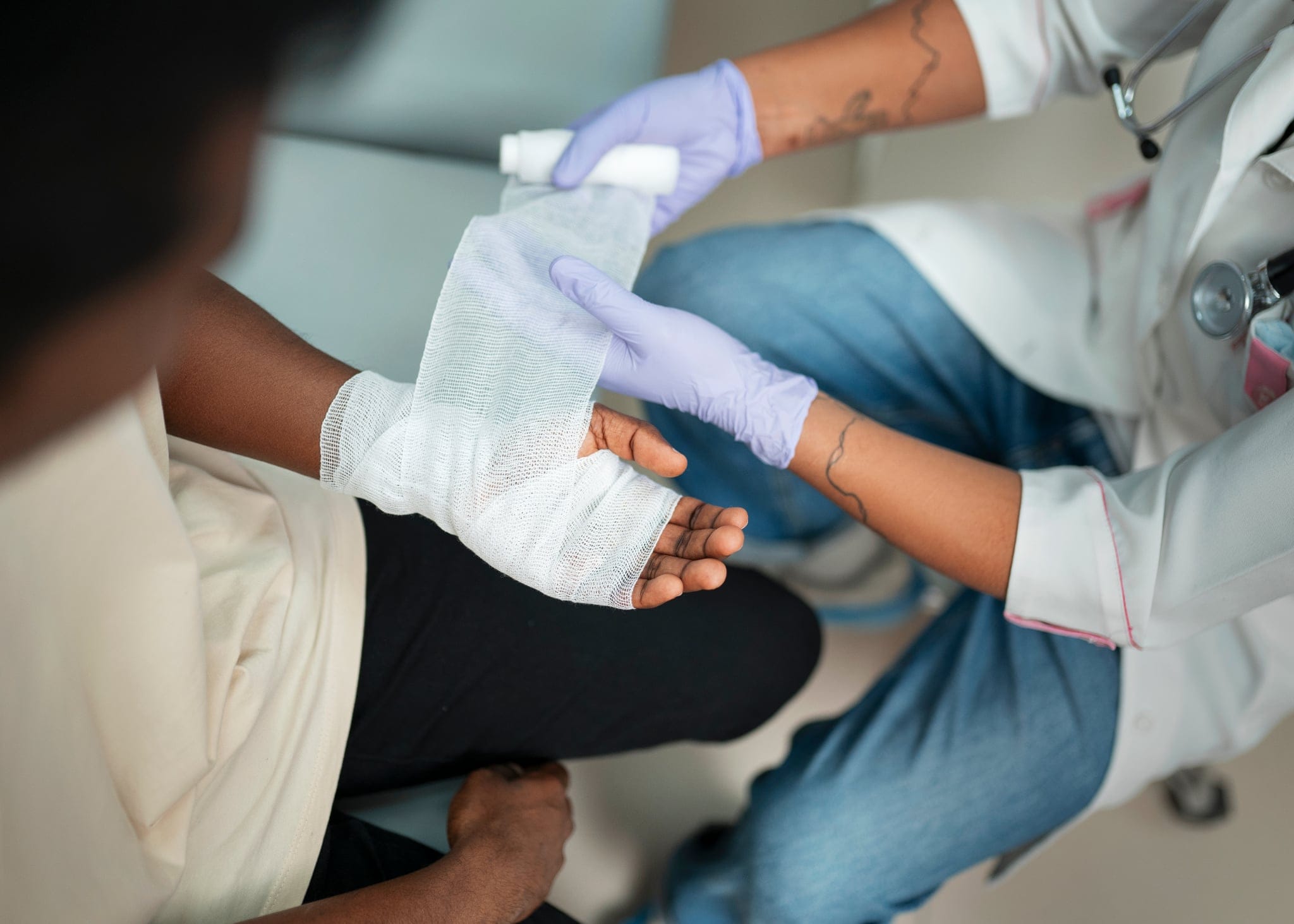
The most important thing you can do after a drunk driving accident is also the most obvious: see a doctor immediately. Emergency room records and same-day urgent care notes create a direct, documented link between the crash and your injuries.
Delayed treatment is the single most common argument insurance adjusters use to reduce settlements. If you wait three days to see a doctor, the insurer’s position is that your injuries could not have been that serious or that they happened somewhere else. Protect yourself by getting evaluated within hours of the accident, even if you feel okay. Adrenaline masks pain. Internal injuries do not always present symptoms immediately.
Keep every record from ER discharge papers, prescriptions, follow-up appointment notes, physical therapy logs, and any bills that arrive afterward. Your compensation is only as large as your documented damages.
Step 2: Call the Police and Get the Report
A police report documenting the driver’s intoxication is foundational to your civil claim. Officers record field sobriety test results, BAC readings, and any statements the driver made at the scene. They also note weather, lighting, road conditions, and witness contact information.
Request a copy of the report from the Brownsville Police Department or Cameron County Sheriff’s Office as soon as it is available, typically within 3–5 business days. Review it carefully. If any details are wrong, such as your name, the location, or the description of injuries, contact the reporting officer to request a correction.
The drunk driver will face criminal DUI charges through the district attorney’s office. Your civil injury claim runs on a separate, parallel track. You do not have to wait for the criminal case to resolve before filing your civil claim. In fact, waiting can hurt you.
Step 3: Document Everything Before It Disappears
Evidence has a short shelf life after a drunk driving accident. Your attorney and you, before you hire one, need to act fast on several fronts.
Photographs and video: Capture vehicle damage, skid marks, traffic signals, and your visible injuries from multiple angles. If the driver’s behavior before or after the crash was recorded on a dashcam, a nearby business camera, or a bystander’s phone, note it immediately.
Witness statements: Get names and phone numbers from everyone who witnessed the crash or saw the driver’s condition beforehand. Written or recorded statements taken close to the event are more reliable than memories recalled months later.
The driver’s BAC record: Blood alcohol test results are collected as part of the criminal arrest. Your attorney can obtain these through discovery once the civil case is filed, and they are powerful evidence.
Step 4: Understand Who You Can Sue
Texas does not limit drunk driving injury claims to a single defendant. Depending on the facts, multiple parties may share liability.
The drunk driver. The at-fault driver and their liability insurance are the primary target. Texas requires a minimum coverage of $30,000 per person and $60,000 per accident, often far less than the cost of a serious injury. When the policy limit is exhausted, you can pursue the driver’s personal assets through a civil judgment.
The bar or restaurant. Under the Texas Alcoholic Beverage Code §2.03, the Texas Dram Shop Act, a business that served alcohol to a visibly intoxicated person, can be held liable for injuries that result. Commercial liquor liability policies often carry limits of $1 million or more, making this one of the most valuable claims available to Texas DUI victims.
A social host. Texas dram shop liability also applies to adults who provide alcohol to minors at private events. If the drunk driver was a minor served at a party, the adult host may share liability.
The driver’s employer. If the drunk driver was operating a company vehicle or was on duty at the time of the crash, their employer may be liable under the legal doctrine of respondeat superior.
Step 5: File Your Claim Before the Deadline
Texas sets a two-year statute of limitations for personal injury claims under Texas Civil Practice & Remedies Code §16.003. The clock starts on the date of the accident. The same two-year deadline applies to dram shop claims.
Two years can pass faster than victims expect, especially when ongoing medical treatment, recovery, and the criminal proceedings consume their attention. Missing the deadline means losing your right to compensation entirely. Texas courts have no discretion to waive it.
One important exception: if the victim was a minor at the time of the accident, the two-year period does not begin until they turn 18. If the victim died, the family has two years from the date of death to file a wrongful death claim.
Step 6: Know What Compensation You Can Recover
Texas law allows drunk driving injury victims to pursue three categories of damages.
Economic damages cover calculable financial losses: past and future medical expenses, lost wages, reduced earning capacity, vehicle repair or replacement, and the cost of in-home care or rehabilitation.
Non-economic damages address losses that do not come with a receipt: physical pain and suffering, mental anguish, emotional distress, disfigurement, and loss of enjoyment of life. Texas does not cap non-economic damages in personal injury cases.
Punitive (exemplary) damages punish the at-fault driver for gross negligence and deter future conduct. Texas courts consistently treat drunk driving as gross negligence. Under Texas Civil Practice & Remedies Code §41.008, punitive damages can reach two times your economic damages plus up to $750,000 in non-economic damages, with no cap at all when the defendant acted with specific intent to harm.
One important note: standard liability insurance policies typically exclude coverage for intentional or criminal acts. Punitive damages awarded against a drunk driver often must be collected from their personal assets, not their insurer.
Step 7: Work with a Drunk Driving Accident Attorney
Insurance companies respond to drunk-driving claims faster than almost any other type of case, not because they are eager to pay. Adjusters contact victims within 24–48 hours of an accident, before many people have hired an attorney or fully understood their injuries, and request recorded statements. Everything said in those statements is used to minimize the claim.
A personal injury attorney who handles DUI accident cases in Texas will handle the following on your behalf:
- Sending preservation demands to bars and traffic camera operators
- Obtaining the criminal case file, BAC records, and police report
- Identifying all potentially liable parties, including dram shop defendants
- Calculating the full value of your damages, including future medical costs
- Negotiating with all insurers simultaneously
- Filing a civil lawsuit if a fair settlement is not offered
Most Texas personal injury attorneys, including Ignacio G. Martinez, handle these cases on a contingency fee basis. No upfront cost, and no fee unless compensation is recovered. The standard contingency rate in Texas is 33–40% of the recovery.
How the Criminal Case Affects Your Civil Claim
A criminal DUI conviction is not required before you can file or win a civil claim. The two cases use different standards: criminal convictions require proof beyond a reasonable doubt, while civil claims require proof by a preponderance of the evidence, meaning more likely than not.
That said, a criminal conviction strengthens your civil case significantly. A guilty plea or jury verdict in the criminal case establishes the driver’s intoxication as a matter of record, which your civil attorney can use as evidence. Courts in Texas have allowed prior criminal convictions to be introduced as evidence in related civil proceedings.
What If the Drunk Driver Had No Insurance?
Uninsured drunk drivers are a real problem in Cameron County. Cross-referencing TxDOT crash data with Texas Department of Insurance records shows that 28% of DUI-involved injury crashes in Cameron County in 2024 involved a driver who was uninsured or underinsured, well above the statewide average of 19%.
If the at-fault driver carried no insurance or insufficient coverage, your own uninsured/underinsured motorist (UM/UIM) policy applies. Texas insurers are required to offer UM/UIM coverage when you purchase an auto policy. If you accepted it, your own insurer covers the gap between the drunk driver’s policy and your actual damages.
Filing a UM/UIM claim in Texas does not raise your premiums if you were not at fault. Notify your own insurer of the accident within 30 days and document everything as carefully as you would for a third-party claim.
Ready to File Your Claim?
Drunk driving accident cases move quickly against victims who wait. Surveillance footage disappears in 30 days. Insurance adjusters begin building the defense file within hours of the crash. Evidence that seems minor today, a bartender’s shift log, a gas station receipt, becomes unavailable within weeks.
Ignacio G. Martinez represents drunk driving accident victims in Brownsville, Cameron County, and across the Rio Grande Valley. There is no upfront cost. If we do not recover, you owe nothing.
Contact Ignacio G. Martinez for a Free Consultation
Frequently Asked Questions
How long do I have to file a drunk driving injury claim in Texas?
Two years from the date of the accident under Texas Civil Practice & Remedies Code §16.003. The same deadline applies to dram shop claims against bars or restaurants. Missing this deadline means permanently losing your right to compensation, so contact an attorney as soon as possible after the crash.
Can I sue the bar that served the drunk driver?
Yes. The Texas Dram Shop Act (Alcoholic Beverage Code §2.03) holds bars, restaurants, and liquor stores liable when they serve a visibly intoxicated person who then causes an accident. These businesses carry commercial liability insurance with much higher limits than most individual drivers, making this claim financially significant.
What if the drunk driver’s insurance doesn’t cover all my damages?
You have several options: file a dram shop claim against the bar that served the driver, pursue the driver’s personal assets through a civil judgment, or use your own UM/UIM coverage. In serious injury cases, all three may be pursued at once.
Do I have to wait for the criminal DUI case to finish before suing?
How much is a drunk driving injury claim worth in Texas?
Settlements range from $15,000 for minor injuries to several million dollars for fatal crashes or cases involving permanent disability. Factors that increase value include a high BAC reading, prior DUI convictions, a dram shop defendant with commercial insurance, and documented long-term medical impact.
What is the Texas Dram Shop Act?
It is Texas Alcoholic Beverage Code §2.03, which creates civil liability for alcohol vendors who serve a customer who is “obviously intoxicated to the extent that he presented a clear danger to himself and others.” It applies to licensed bars, restaurants, and stores, and also covers adults who serve alcohol to minors at private events.
Can I get punitive damages from a drunk driver in Texas?
Yes. Texas courts treat drunk driving as gross negligence, which qualifies for exemplary (punitive) damages under Texas CPRC §41.008. The cap is substantially higher than in ordinary negligence cases, and it disappears entirely when the defendant acted with specific intent to harm.
What if I was partially at fault for the accident?
What does a drunk driving accident attorney cost in Texas?
Most personal injury attorneys, including Ignacio G. Martinez, handle DUI accident cases on a contingency fee basis. No fees are charged unless compensation is recovered. The standard contingency rate in Texas is 33–40% of the recovery amount.
What should I avoid doing after a drunk driving accident?
Do not give a recorded statement to the at-fault driver’s insurance company before consulting an attorney. Do not accept a fast settlement offer. Early offers rarely reflect the full value of your injuries, especially before the extent of medical treatment is known. Do not post about the accident on social media, as insurers monitor these accounts during active claims.
See also: Who Pays for Damages After a Drunk Driving Accident in Brownsville? | Legal Consequences of DUI Accidents in Texas
About the Author
Ignacio G. Martinez is a dedicated personal injury and accident advocate based in Brownsville, Texas. Serving injured victims and families across Cameron County and the broader Rio Grande Valley, his practice focuses on securing comprehensive civil compensation from all liable parties following serious motor vehicle accidents. He is a member in good standing of the State Bar of Texas, the Texas Trial Lawyers Association, and the Cameron County Bar Association.